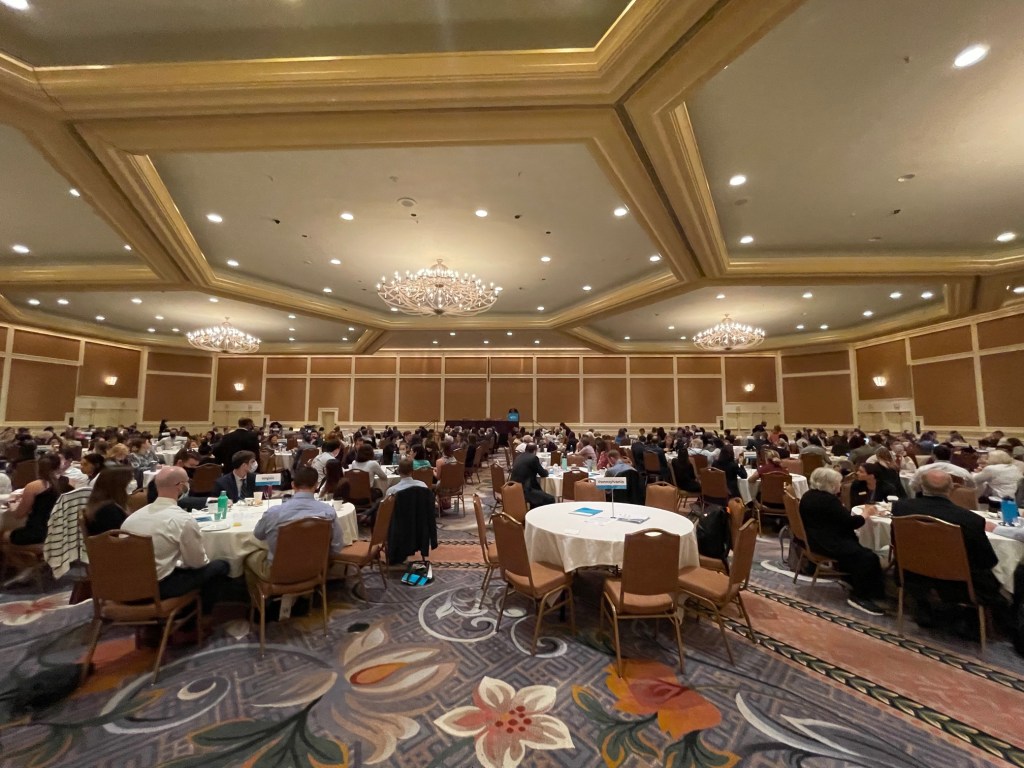
Early this week, our class got the opportunity to attend the 2021 APTA Advocacy Day. I am grateful to my program for the (mostly) all-expense paid hotel stay and trip to DC. The night before advocacy day, all delegations met in a giant ballroom (pictured below) in the Omni Shoreham Hotel to discuss the plan for how to advocate for our professions. They covered the hook, line and sinker points on four important bills to Congress members and their aides. At the end of the night, we had decided our speaking roles and I had been assigned to speak on Bill HR 3320. Afterwards, we were set free to feed our very hungry selves. Some of us went to a Nationals game, but I opted to have dinner at an Afghan restaurant called Lapis that was donating a portion of its profit towards helping Afghan refugees homes. Great food & company!
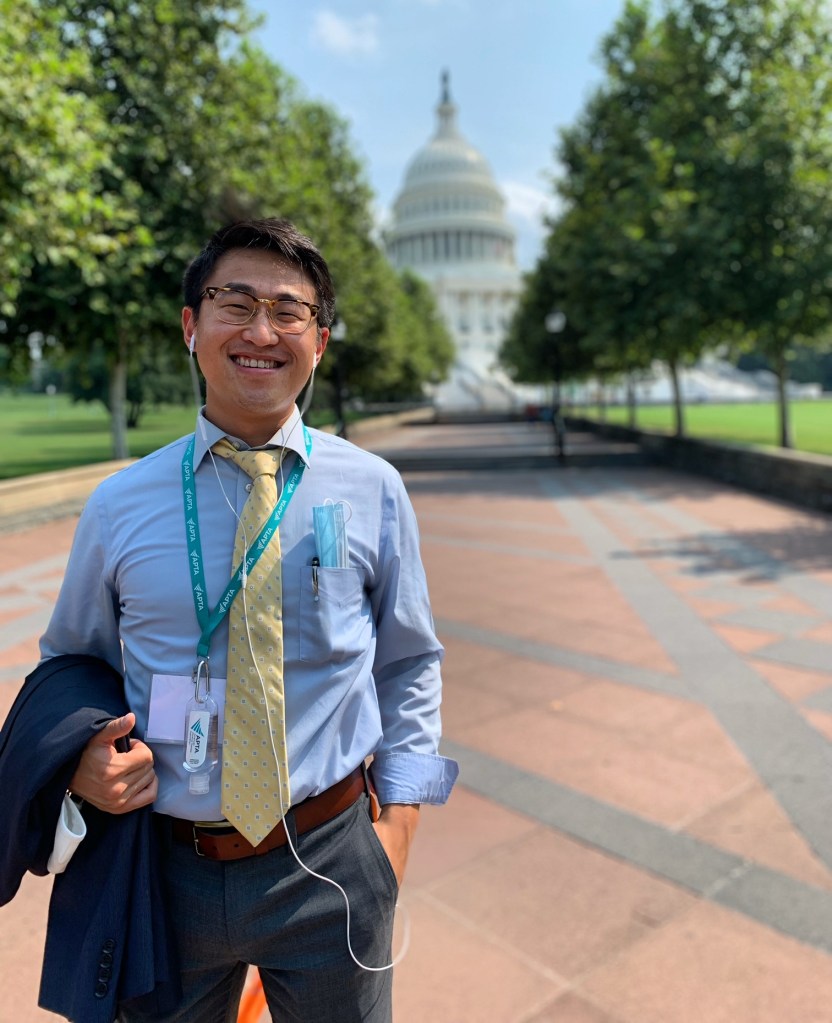
Advocacy Day started bright and early with a 6:30am breakfast, a speech from APTA President Sharon Dunn, and one final debrief before we were off on the buses to Capitol Hill. We arrived to the hill quite early, and our first meeting wasn’t until 11am, so we spent the morning at Union Station to get Second Breakfast and to work on our talking points.
Once we were finally getting started, the sessions were rapid fire one after the other. There was small opportunity for breaks but my time to speak came quickly. I am quite proud of what I got to speak, so I will post it here below:
Aaron Jeong, 3rd year student of physical therapy. I’d like to speak on bill HR 3320, the Allied Health Workforce Diversity Act. As a child of immigrants, I have witnessed the value of having practitioners who look like myself and my parents. In fact, they would often rather see a Korean clinician with fewer qualifications than see someone more qualified through an interpreter. Research has continued to show that outcomes are improved when patients receive care from members of their own racial and ethnic background.
The goal of HR 3320 is to increase the workforce diversity of physical therapists, occupational therapists, speech language pathologists, respiratory therapists and audiologists in order to provide a more culturally competent workforce capable of understanding the changing dynamics of America’s racial and ethnic landscape. Furthermore, minority groups disproportionately live in areas where there are healthcare provider shortages already. Therefore, increasing workforce diversity in racial & ethnic minorities, persons with disabilities and students from economically disadvantaged backgrounds doubly fills spaces where more clinicians are already needed.
We ask you to cosponsor HR 3320, the Allied Health Workforce Diversity Act, to share $8 million across the aforementioned professions in recruiting graduate classes filled with students from underrepresented and disadvantaged backgrounds. This $8 million will go towards funding, attracting, and retaining students from these backgrounds as well as going towards recruitment strategies, enrollment, and graduation rates.
I am the product of Pell Grants, and need-based financial aid. I believe these programs work and many of my classmates who were identified through funnel programs to physical therapy school would tell you the same. Thank you.
9/14/21
I admit that this experience was a bit harrowing. Due to pandemic restrictions, most of the Congressional meetings were being conducted virtually. And as there wasn’t much privacy in the space that we were in, I felt the pressure of all the listening ears around me.
I am not so sure I am cut out for this work for the future. I continue to see myself as wanting to be a clinician first. However, I am grateful for the experience to work with Mark Bouziane and the Virginia team. Overall, it was a good experience and I would recommend it to anyone who does not find public speaking to be too aversive.
That’s all for now!
AJ

 First Wealth Health